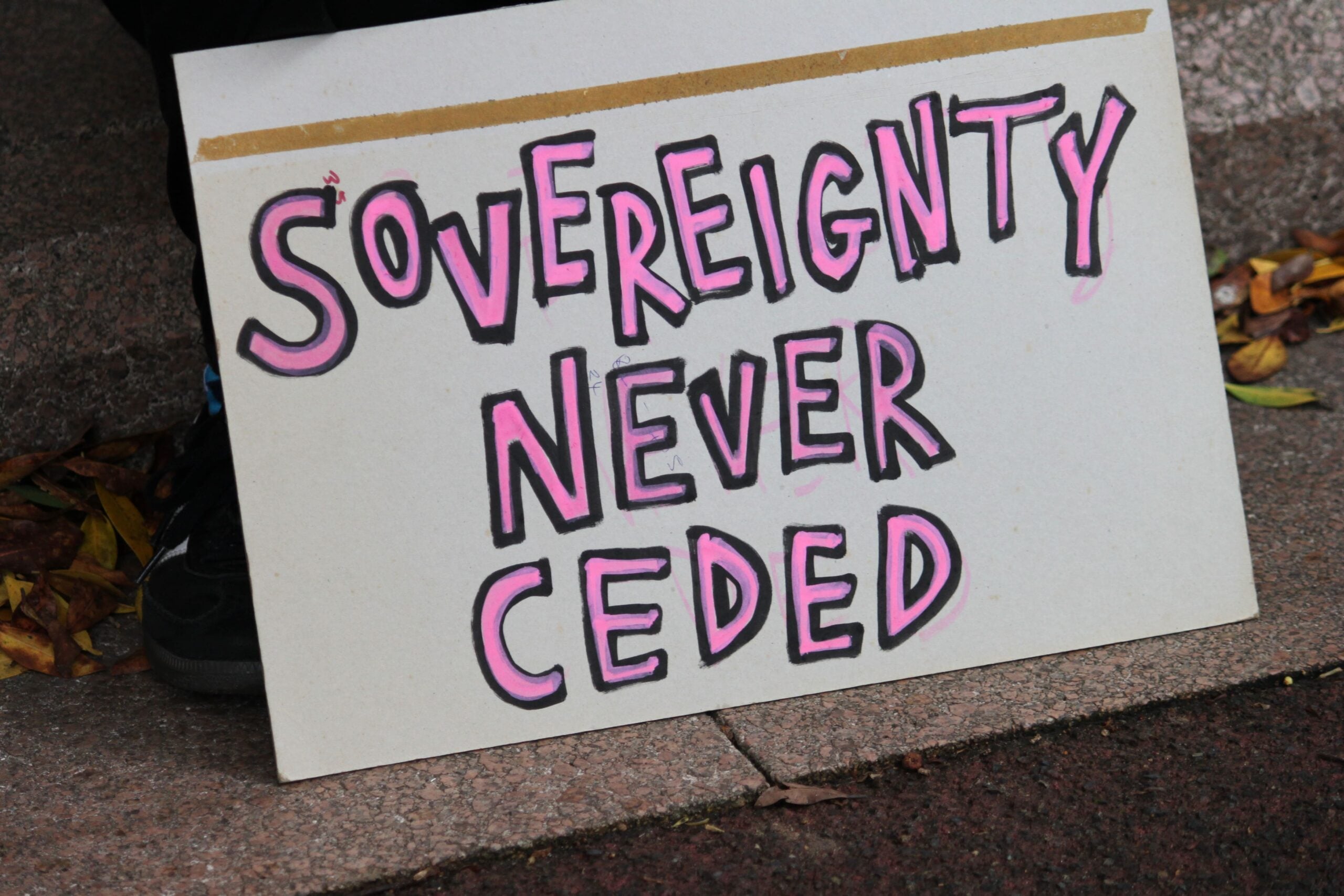
For generations, First Nations people have spoken out about racism in Australia, documenting the harms, advocating for change and leading solutions.
This year, those experiences and solutions are at the centre of a Parliamentary Inquiry into racism, hate and violence directed at Aboriginal and Torres Strait Islander people, and the actions governments can take to address them.
To help inform the inquiry, the National Justice Project, Call It Out and the Alternative First Responders campaign each made submissions drawing on our professional expertise, research, insights, lived experience and community-led solutions.
Together, these submissions tell a clear story about racism in Australia, its ongoing impacts on First Nations peoples and the urgent reforms needed to address it.
Racism is systemic
The National Justice Project’s submission focuses on systemic racism and the ways discrimination is embedded within institutions, laws and policies.
For many First Nations people, racism isn’t experienced as a single incident. It shapes interactions with systems throughout their lives, including healthcare, education, policing, child protection and the justice system.
This in-built discrimination causes lasting harm and contributes to deep mistrust of institutions that are meant to provide support and protection.
The submission highlights how these impacts of historical and ongoing racism continue to be felt today, driving inequalities in health, economic and justice outcomes for First Nations communities.
Governments need to recognise racism is a structural issue embedded within the institutions that shape the lives of First Nations people every day.
To begin addressing this, the submission calls for a National Anti-Racism Framework, alongside measures developed by First Nations leaders to track and respond to racism, hate and violence.
Racism remains widespread
The Call It Out submission, co-authored by the Jumbunna Institute and National Justice Project, highlights the extent of racism targeting First Nations people across Australia.
Drawing on research and experiences documented through the Call It Out Racism Register, the submission shows how racism continues to affect First Nations people in many areas of their lives, including work, public spaces and social media.
The submission points to growing online abuse, racist behaviour becoming more normalised, and governments and institutions not doing enough to respond.
It also shows that the growth of the internet and social media has made racism more visible, widespread and accepted. It links this to deeper racist attitudes that Aboriginal and Torres Strait Islander people continue to experience.
Importantly, it reinforces that racism isn’t just something that happens occasionally or belongs to the past, for many First Nations people, it is a daily reality.
The submission supports community-led solutions, including a national education plan, a coordinated government strategy and funding for the Call It Out Racism Register to collect evidence about racism and help drive change.
Alongside preparing the submission, the Call It Out team, supported by the National Justice Project, generous volunteers and advocates Thomas Mayo and Jade Ritchie, provided direct support to Aboriginal and Torres Strait Islander people interested in making their own submissions to the Inquiry.
As well as distributing community information, the team engaged with 55 individual community members and helped lodge 20 submissions to the Inquiry. Community members courageously shared harrowing accounts of racism experienced directly, over generations and across systems. We want to acknowledge the strength and resilience of each and every community member who has contributed to the Inquiry.
First Nations-led solutions already exist
The Alternative First Responders Campaign, part of the National Justice Project, made a submission focused on racism in policing. It shares how racism in the system is causing serious harm, and police violence is connected to the deeper cultural and structural problems of policing.
Highlighting the over-incarceration of First Nations people and the disproportionate impact of policing on communities, the submission shows that many situations currently responded to by police would be better handled through community-led, culturally safe services focused on care and support.
To reduce overpolicing and the harm caused, we need to move away from a default police-first approach and invest in alternative first responder models designed and led by communities themselves.
It also stresses that First Nations communities should be recognised as experts in policy design, with First Nations leadership involved at every stage of development and delivery.
The submission calls for funding to be shifted away from expanding police capabilities and into community-led health, social and crisis response programs that build long-term safety and resilience.
It also highlights that First Nations communities across Australia are already running successful alternatives that should be the blueprint for how we can support all communities and learn to prioritise care over punishment. These models show that safer, more effective responses are already possible.
Moving from evidence to action
Racism targeting First Nations peoples isn’t a thing of the past; it is an ongoing reality, and the impacts of systemic racism are felt by communities every day.
We, alongside countless advocates and community members, have provided evidence which reinforces what First Nations communities have been saying for generations: racism is widespread, systemic and deeply harmful.
The submissions make clear that governments must now act by strengthening accountability and investing in First Nations-led solutions grounded in the rights of First Nations peoples, sovereignty and self-determination.