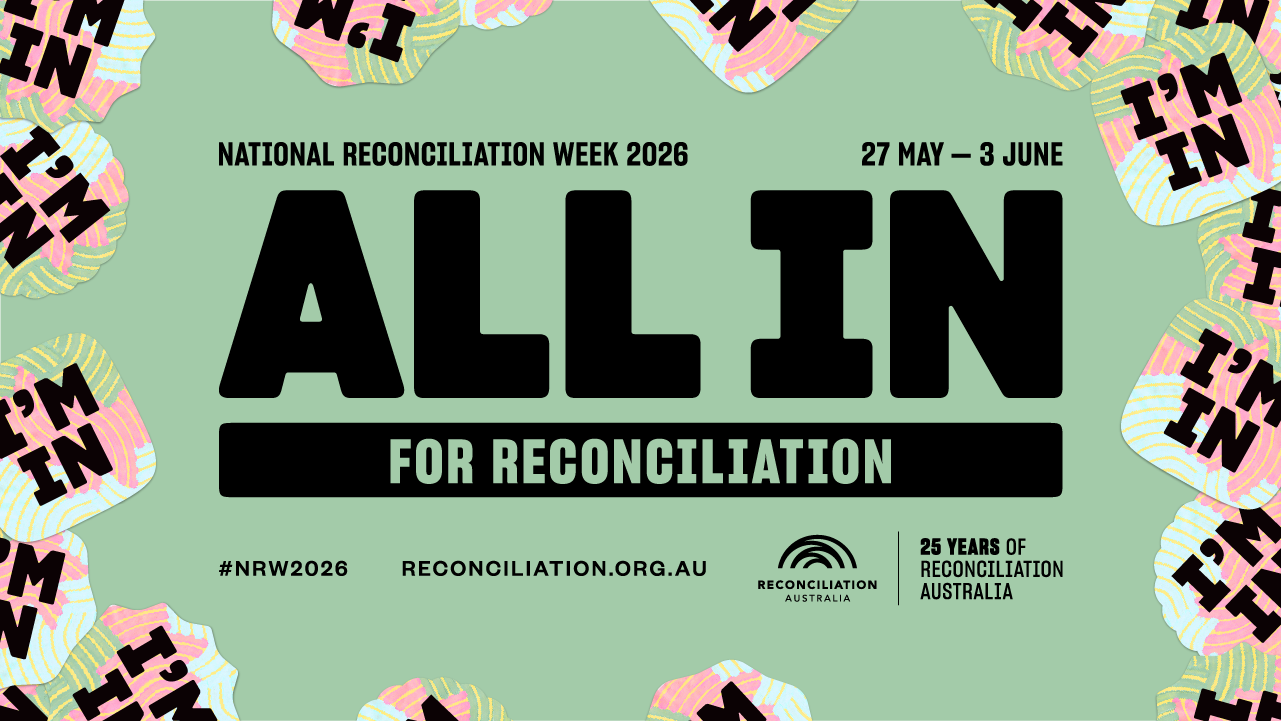
‘Reconciliation is not a spectator sport’ is the message behind this year’s National Reconciliation Week theme.
‘All In’ is a direct call for every person to stand alongside First Nations people and commit to reconciliation every day. Standing alongside is not the same as standing back and watching.
But standing alongside is not the same as standing back and watching. The weight of reconciliation has always fallen on the people it should be serving.
National Reconciliation Week is not asking Aboriginal and Torres Strait Islander colleagues and friends to educate, share their pain, or carry the emotional and physical labour. It’s about non-Indigenous people doing the ongoing work, the kind that goes well beyond bake sales and morning teas once a year.
Held from 27 May to 3 June every year, the dates mark two significant milestones: the successful 1967 referendum, where 90.77 per cent of Australians voted ‘yes’ to counting Aboriginal and Torres Strait Islander peoples in the census and giving the Australian Government the power to make laws for Aboriginal and Torres Strait Islander people.
It also marks the 1992 High Court Mabo decision, which overturned the terra nullius, the lie that Australia was unoccupied when the British arrived.
Read more on these dates at Reconciliation Australia.
This year’s campaign was developed in collaboration with Carbon Creative, a First Nations-owned and operated agency. The artwork, Gaagal (meaning “Ocean” in Gumbaynggirr), is by Gumbaynggirr/Bundjalung artist Otis Hope Carey.
Otis uses the ocean as a metaphor for people from all walks of life moving together, ripples spreading outward as a reminder that meaningful change starts with all of us.
Call out racism when you see it
Showing up for reconciliation means taking action against racism targeting First Nations people. Standing up to racism, and actively calling it out is a critical action that non-Indigenous witnesses, allies and bystanders can do every day.
The Call It Out racism register, led by the Jumbunna Institute for Indigenous Education and Research and supported by the National Justice Project, allows Aboriginal and Torres Strait Islander people and non-Indigenous bystanders to report racism they have experienced or witnessed.
The 2024–25 report found that over half of all incidents were systemic, not just individual acts but racism embedded within the policies and cultures of organisations and institutions.
This plays out across public services, workplaces and schools, where governments and organisations subject Aboriginal and Torres Strait Islander people to harmful treatment and discriminatory policies.
This year’s data also revealed a sharp rise in incidents targeting children, demonstrating how racism is deeply impacting young people.
Reporting racism to Call It Out helps to build a collective picture of where racism is happening, strengthens the case for community-led solutions and government accountability.
Support First Nations businesses, organisations, and charities
We encourage you to do your own research into local Indigenous-owned businesses, but here are a few organisations to explore:
- Tjanpi Desert Wevers
- NPY Women’s Council
- Bush Balm
- Clothing the Gaps
- Town Camp Designs
- Waminda
- Pay the Rent
- The Dhadjowa Foundation
- First Nations Futures
For donations, Welcome to Country’s Aboriginal charity guide lists organisations doing community-led work on the ground.
Listen to and amplify First Nations voices
One of the most important things non-Indigenous Australians can do is listen and engage all year round. Seek out First Nations voices in podcasts, literature, music, art and film, politics and advocacy. Listen to stories, knowledge, and perspectives across every creative and public platform.
Listening is only the beginning. Amplify First Nations voices within your own circles and channels, advocating for Indigenous rights.
Attend a National Reconciliation Week event
Workplaces, schools, and community groups across Australia host events in the run up to and throughout National Reconciliation Week each year, from in-person talks and creative workshops to webinars and educational sessions.
Search the Reconciliation Australia events calendar to find something near you or register your own.