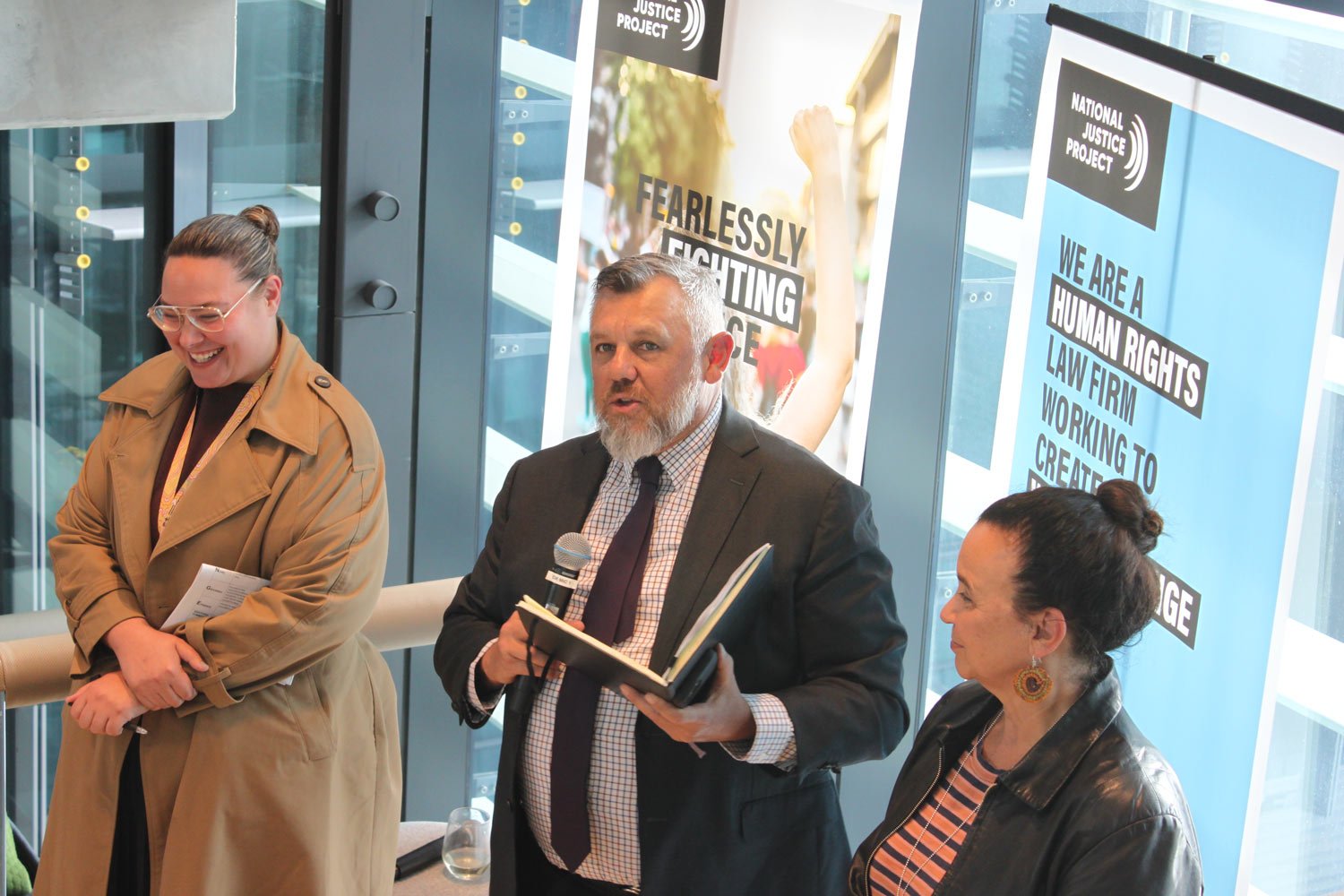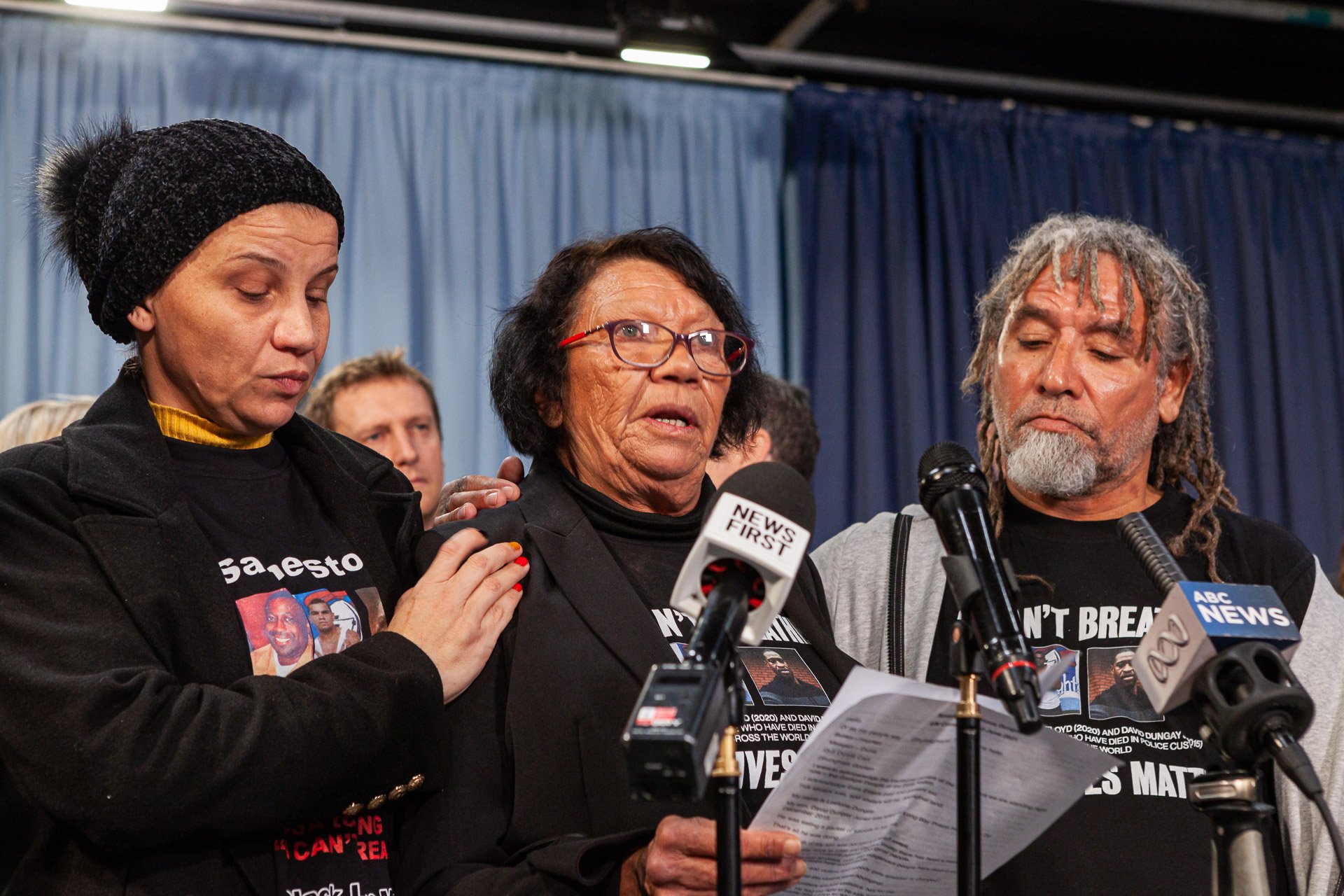
Every major human rights case begins with people willing to stand up for justice. At the National Justice Project, volunteers play a vital role in fearlessly fighting discrimination across Australia.
From supporting landmark legal cases to contributing research and advocacy, their work helps expose injustice, hold powerful institutions to account, and defend the rights of communities who are being ignored by the systems.
Over the past decade, more than 200 students and early-career lawyers have worked with us, gaining hands-on experience in strategic litigation and advocacy while helping drive real change.
If you’re passionate about defending human rights and want to use your skills to make meaningful impact, find out more about volunteering with the National Justice Project:
Volunteering opportunities at the National Justice Project
At the National Justice Project, it takes courageous clients, determined lawyers and advocates, passionate supporters and a community of volunteers to make a change.
Legal and administrative support
We use the law as a tool for truth-telling, accountability, and systemic change. Our work has contributed to reforms across refugee healthcare, criminal law, police accountability, cultural safety in health systems, and responses to mental health crises.
Volunteers work alongside leading human rights lawyers to support casework and legal research.
Other opportunities include placements for Practical Legal Training (PLT) and law internship students.
Beyond legal research and casework, you’ll build connections with people who share your passion for a fairer Australia.
Social justice clinics
Our students have a valuable opportunity to work on real-world social justice law through our Monash and Macquarie University Social Justice Clinics. During the seminars, students help us build cases, write submissions, lodge complaints, build evidence, and conduct research. More than 100 students have completed a Monash clinic with us since 2020. Read more.
Students can also take part in the Tech4Justice education lab, which aims to increase access to justice and accountability through technology. Students help build the Tech4Justice toolkit, including chatbots to help write complaints, AI triaging, complaints pathways, fact sheets and complaints flowcharts.
Advocacy and campaigns
Outside the courtroom, we lead powerful initiatives which challenge injustice through technology, data, and public advocacy. Volunteers can support these cutting-edge projects in many ways, from research and data analysis to communications support, and assisting with innovative tools designed to improve access to justice.
Call It Out, led by the Jumbunna Institute for Indigenous Education and Research in partnership with the National Justice Project, is a simple and secure way for people to report incidents of racism and discrimination towards First Nations Peoples. These reports are collected, held securely and analysed to help raise awareness and drive systemic change.
Hear Me Out is a free, independent, AI-powered complaints platform that helps people who have been harmed by systems understand their rights, find the right complaint pathway, and draft clear, effective complaints. By making complaints easier to navigate, the platform helps remove a major barrier to accountability while also generating insights into where systems themselves are failing.
Alternative First Responders is a national campaign advocating for the funding and expansion of community-led alternative first responders to police across Australia. With more than 36 coalition members, the campaign raises awareness about the current police-first default for call-outs that do not require a police response, and the harms this can and has caused. By prioritising first responses grounded in care rather than force, we can reduce systemic harm caused by policing and support people to live with dignity and free from discrimination.
Communications and social media
Media and communications are vital tools in advocating for the right to safety and care for every person in Australia. Gaining public support for our clients’ cases, the projects we are leading, and the fundraising campaigns we are running enable us to keep doing the work we do.
Volunteers can support this work by contributing to the design and delivery of external media, marketing, and public relations activities. This may include advocacy work, ideation and production of written and video content for the National Justice Project’s website or social media platforms.
Who can volunteer?
Volunteers are typically law students, recent graduates and early-career lawyers who want to gain hands-on experience in human rights law. However, we also welcome people from a range of backgrounds with skills in research, communications, technology, and advocacy.
All volunteers must be over the age of 18 and share a passion for justice and human rights.
How to apply
If you want to register your interest in volunteering at the National Justice Project, please find out more here, or fill in this form.
Other ways to support the National Justice Project
If you can’t commit to volunteering with us regularly, there are many ways to support us and help drive change.
- Donate to help us continue our vital work defending human rights and holding powerful institutions to account.
- Sign up for our newsletter to receive updates on landmark cases, research, and advocacy initiatives.
- Follow us on Instagram, Facebook, LinkedIn and TikTok to amplify stories of injustice and share our campaigns with your networks.
- Call It Out: You can report racism targeting First Nations people in the Call It Out Racism Register, helping to highlight systemic issues and contribute to meaningful reform.
- Sign the pledge: By signing our Alternative First Responders pledge, you are joining a movement demanding safety, dignity and care in every first response to mental health crises.
FAQs
How do volunteers contribute to real legal cases?
Volunteers work alongside leading human rights lawyers and advocates, and gain hands-on experience in social justice law, advocacy and strategic litigation. Practically, they support casework and research.
Do I need to be a law student to volunteer?
For legal volunteers, our preference for legal volunteers is 4th or 5th year law students who can commit to two days in the office per week for six months, although it can vary.
While the majority of our volunteers are law students, recent graduates and early-career lawyers, we also welcome people from a range of backgrounds with skills in research, communications, technology, and advocacy.
Prior legal experience is not always required and we encourage anyone who is passionate about justice to reach out, as volunteer opportunities may arise throughout the year across legal work, research, advocacy, and project support.
Are volunteer legal roles competitive?
Yes, volunteer legal roles can be competitive, particularly with organisations working in human rights and social justice.
We receive strong interest in our volunteer program, so we look for people who share a genuine commitment to social justice, strong research and communication skills, and a willingness to learn.
How many hours do volunteers work?
Volunteer hours can vary depending on the role, availability, and the needs of the team. At the National Justice Project, most volunteers commit to a regular part-time schedule, often between 1–3 days per week, or an agreed number of hours over a set period.
We offer flexible arrangements so volunteers can balance their work with study, employment, or other commitments, however legal volunteers are expected to work from the office. Before starting, we work with volunteers to agree on a schedule and duration that suits both the volunteer and our teams.